Defense track systems operate under heavy loads, repeated impact, and severe mechanical stress, with low tolerance for dimensional variation. For defense OEMs, component reliability supports field performance, operational readiness, and the safety of personnel working in demanding conditions. When a track manufacturer encountered fit issues with rubber components from another supplier, they turned to Soucy Baron for a solution.
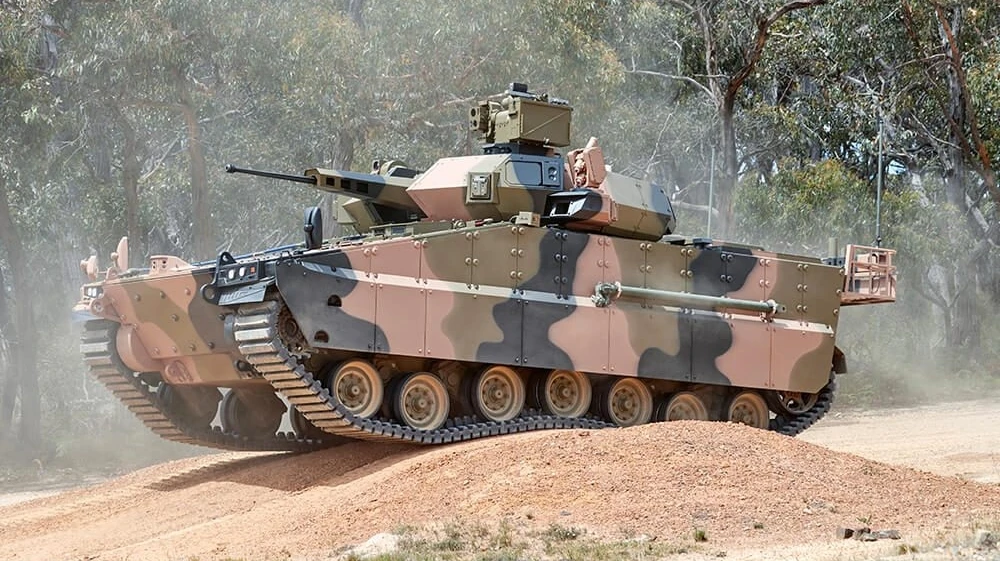
Tighter Tolerances, Stronger Tracks: How Soucy Baron Solved a Critical Problem for a Defense Track Manufacturer
THE CHALLENGE: Maintaining Fit and Consistency Across Critical Components
Track assembly is complex, and depends on precise fit between critical internal rubber components, including guide lugs and drive lugs (made up of hearts and caps). Their geometry had to be tightly controlled, and the guide lugs components also required reliable insert-to-rubber adhesion.
While some manual adjustment is part of the track manufacturing process, the rubber components the track manufacturer had been receiving required extra handling to achieve proper fit. That added manipulation reduced assembly consistency and made accurate positioning of internal reinforcement harder to maintain.
Dimensional variation was more than a manufacturing issue. If not corrected, fit issues could also create gaps between components, trap air, and lead to uneven rubber distribution in the finished track. Steel wire placement was also dependent on having the correct rubber volume in the right location.
To protect the integrity of the finished track and minimize manual adjustment, the track manufacturer needed a supplier that could verify critical dimensions and internal structure before full-scale manufacturing.
THE SOLUTION: Refining the Production Process for Better Dimensional Control
After analyzing the dimensional requirements of the application, Soucy Baron determined that the components needed a new production approach to improve control over rubber volume, part shape, and repeatability. The track manufacturer had not initially considered changing how these components were made, but Soucy Baron’s solution allowed faster development of the drive lugs while maintaining part-to-part consistency.
The production adjustment addressed the biggest part of the challenge. Soucy Baron also used a controlled proprietary process to prepare component surfaces for the customer’s next processing step.
Before full-scale manufacturing, Soucy Baron produced prototype parts for assembly evaluation, then used 3D scanning and CMM (Coordinate Measuring Machine) inspection to verify dimensional control. Internal cutaway checks confirmed rubber placement, air presence, and adhesive coverage.
THE RESULTS: Supporting a More Stable Assembly Process
Soucy Baron’s solution improved dimensional control, fit between parts, and steel wire positioning while reducing manual manipulation on the line. With those improvements, the track manufacturer was able to meet the defense OEM’s strict requirements with consistent track quality and increased assembly efficiency. For the defense sector, that level of manufacturing control is critical for equipment that must perform reliably in demanding field conditions.

Soucy Baron supports defense OEMs with molding, rubber-to-metal bonding, simulation, 2D and 3D design support, build-to-print execution, clean-sheet component development, and access to a broad formulation base for demanding land, sea, and air platforms.